30 Sep 2026
Mapping the Chronological Developments That Defined Poker Room Standards
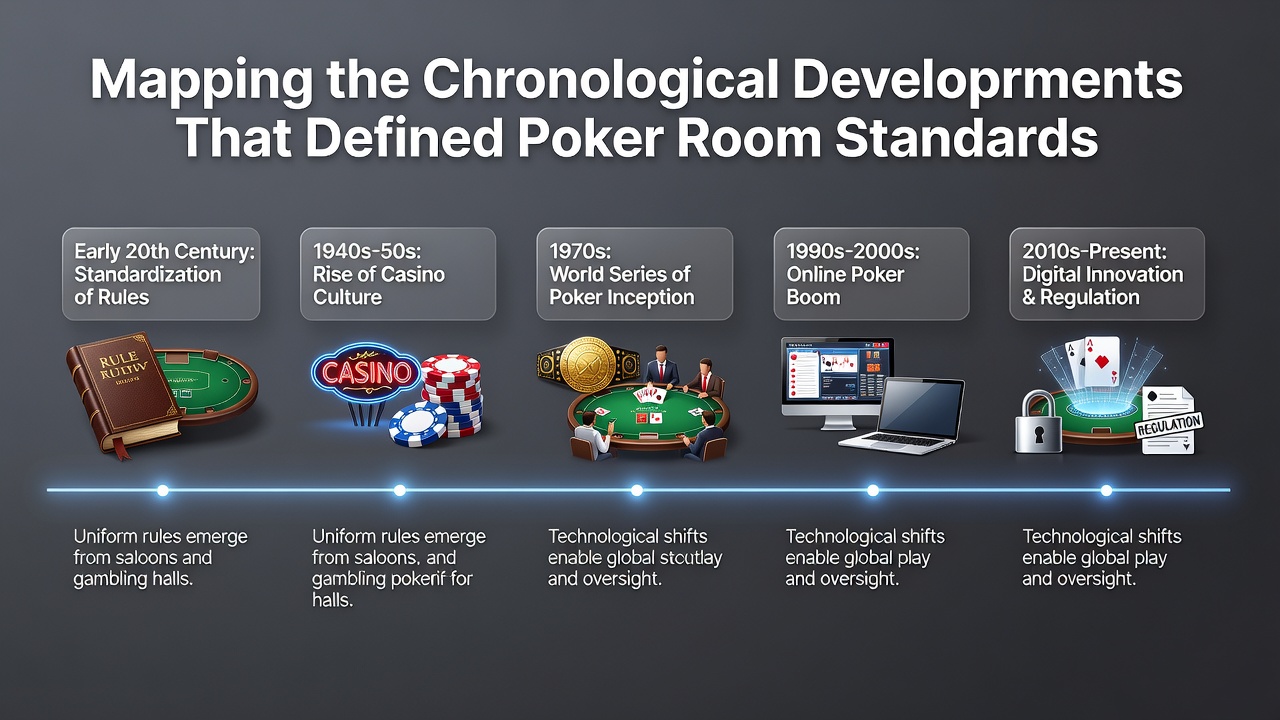
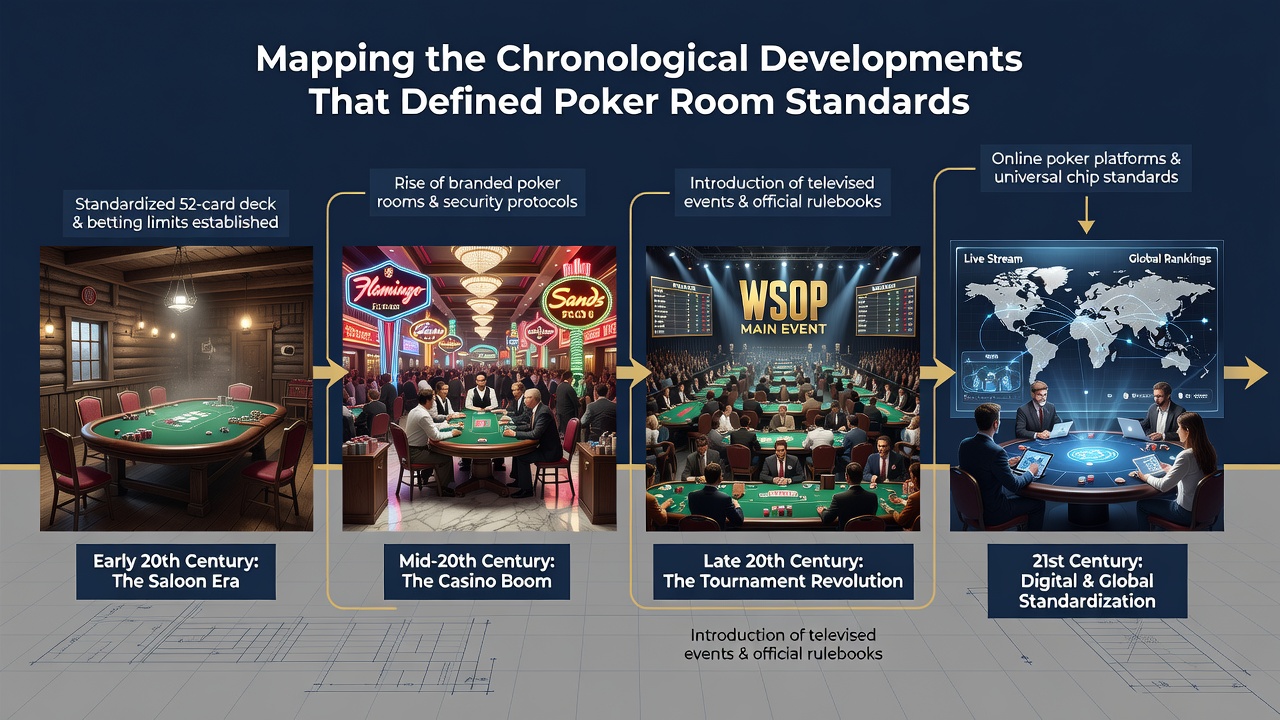
Early poker rooms took shape in the riverboats and saloons of the American frontier during the 1800s, where operators established basic rules for table stakes, dealer conduct, adn dispute resolution that later formed the foundation for regulated environments. Those initial standards focused on preventing outright cheating through visible shuffling procedures and house oversight, while state laws in places like Nevada began formalizing licensing requirements by the early 1900s to separate legitimate operations from illegal gambling dens.
Post-War Expansion and Regulatory Foundations
After World War II, Nevada legalized and expanded casino operations, which prompted the creation of the Nevada Gaming Control Board in 1955 to enforce uniform standards across poker rooms including minimum bankroll requirements, employee background checks, and game integrity protocols. Other states followed similar paths decades later, with New Jersey adopting comparable oversight structures in the 1970s that emphasized surveillance systems and financial reporting to maintain public trust. Data from regulatory archives shows these frameworks reduced documented fraud incidents by establishing mandatory auditing cycles and player fund segregation rules that carried forward into later eras.
Digital Transition in the Late 20th Century
The arrival of online poker platforms in the 1990s shifted standards from physical table inspections to software verification and network security protocols, with early operators adopting random number generator certifications to replicate the fairness of live dealing. International jurisdictions such as the Isle of Man introduced licensing regimes by 2001 that required third-party testing for game fairness, while Canadian provincial authorities developed parallel guidelines for digital operations that stressed data encryption and responsible gaming measures. Observers note that these adaptations addressed the new challenges of remote participation without physical oversight, leading to industry-wide adoption of standardized payout verification processes.
Impact of Major Legislative Changes
The 2006 Unlawful Internet Gambling Enforcement Act in the United States created a sharp divide in standards between domestic and offshore poker rooms, forcing many platforms to relocate servers and adopt stricter compliance layers such as geolocation verification and transaction monitoring. Research from academic institutions tracking global gaming markets indicates that this legislation accelerated the development of unified technical standards among remaining operators, including secure socket layer protocols and independent audit trails that later became benchmarks for licensing renewals worldwide.
Black Friday enforcement actions in 2011 further refined these expectations when authorities targeted major sites for violations involving player fund handling, which prompted surviving rooms to implement segregated account structures and real-time reporting dashboards. European regulators outside the United Kingdom, including those in Malta and Gibraltar, responded by tightening player protection rules around age verification and self-exclusion lists, creating cross-border templates that influenced standards in emerging markets.
Technological and Security Milestones
By the mid-2010s, standards evolved to incorporate advanced encryption and blockchain-based transaction logging in select jurisdictions, with Australian regulatory bodies publishing guidelines that required annual penetration testing and multi-factor authentication for account access. Those who've examined industry reports from this period find that such measures reduced unauthorized access complaints significantly across licensed platforms. Professional network directories and compliance associations began sharing best practices for server redundancy and dispute resolution systems, which helped smaller operators meet benchmarks previously reserved for larger enterprises.
Contemporary Standards and Future Outlook
Current frameworks integrate artificial intelligence for real-time monitoring of unusual betting patterns and automated responsible gaming interventions, while licensing bodies in multiple regions mandate transparent return-to-player percentages published on room interfaces. In September 2026, several North American and European authorities are scheduled to align on updated interoperability standards for cross-platform player tracking, which will allow consistent application of self-exclusion across multiple operators without duplicating verification steps. Figures from gaming associations reveal steady growth in certified rooms that meet these layered requirements, reflecting incremental rather than abrupt shifts in operational expectations.
Conclusion
Chronological mapping of poker room standards shows a consistent progression from localized physical safeguards to globally coordinated digital protocols driven by technological capability and regulatory responses. Each phase built upon prior foundations, incorporating new verification methods while preserving core principles of game integrity and financial accountability. Those studying these developments see clear patterns where legislative events and certification advancements directly shaped the operational norms that define licensed poker rooms today.